The Importance of Proper Pruning Before Hurricane Season in Southwest Florida
Hurricane season is here, and if you live in Southwest Florida, your trees are on the front line. From Sanibel and Captiva to Fort Myers, Naples, Bonita Springs, and Estero, the trees surrounding your home face sustained winds, flying debris, and saturated soil for six straight months. The single most effective thing you can do to protect both your trees and your property is proper pruning—done the right way, by a certified professional, before the storms arrive.
Why Proper Pruning Matters During Hurricane Season
A tree's canopy is essentially a sail. When wind hits a dense, unthinned canopy, it catches that force and transfers it to the trunk, branches, and root system. The wider and thicker the canopy, the more wind load the tree has to absorb. Proper pruning reduces that sail effect by selectively thinning the canopy, removing dead or structurally compromised branches, and improving airflow through the tree so wind can pass through rather than push against it.
But there is a critical distinction: proper pruning is not the same as cutting. Thinning a canopy by 15–20% is strategic and beneficial. Removing 30% or more of the live canopy—or worse, topping the tree—starves it of the foliage it needs to produce energy, stresses the tree, and triggers weak, fast-growing regrowth that is actually more likely to break in a storm. This is why hurricane prep pruning should always be performed by an ISA Certified Arborist who understands tree biology, not just a crew with chainsaws.
Topping a tree—cutting the main branches back to stubs—is never acceptable hurricane preparation. It permanently damages the tree's structure, encourages weak regrowth, and makes the tree more likely to fail in future storms. If a tree is that compromised, removal by a professional is the safer choice.
What Proper Hurricane-Season Pruning Actually Includes
Hurricane preparation pruning is a targeted process. An ISA Certified Arborist evaluates each tree individually and focuses on the specific risks that make it vulnerable in high wind. Here is what that work typically includes:
- Crown thinning — selectively removing branches throughout the canopy to reduce wind resistance and allow air to flow through the tree.
- Deadwood removal — eliminating dead, dying, or broken branches that become projectiles in high wind.
- Structural pruning — correcting weak branch unions, co-dominant stems, and crossing branches that are prone to splitting under wind load.
- Reduction pruning — shortening over-extended branches that act as levers in a storm, using proper reduction cuts rather than heading cuts.
- Root flare inspection — checking for decay, girdling roots, or soil heaving that could cause the tree to uproot in saturated soil.
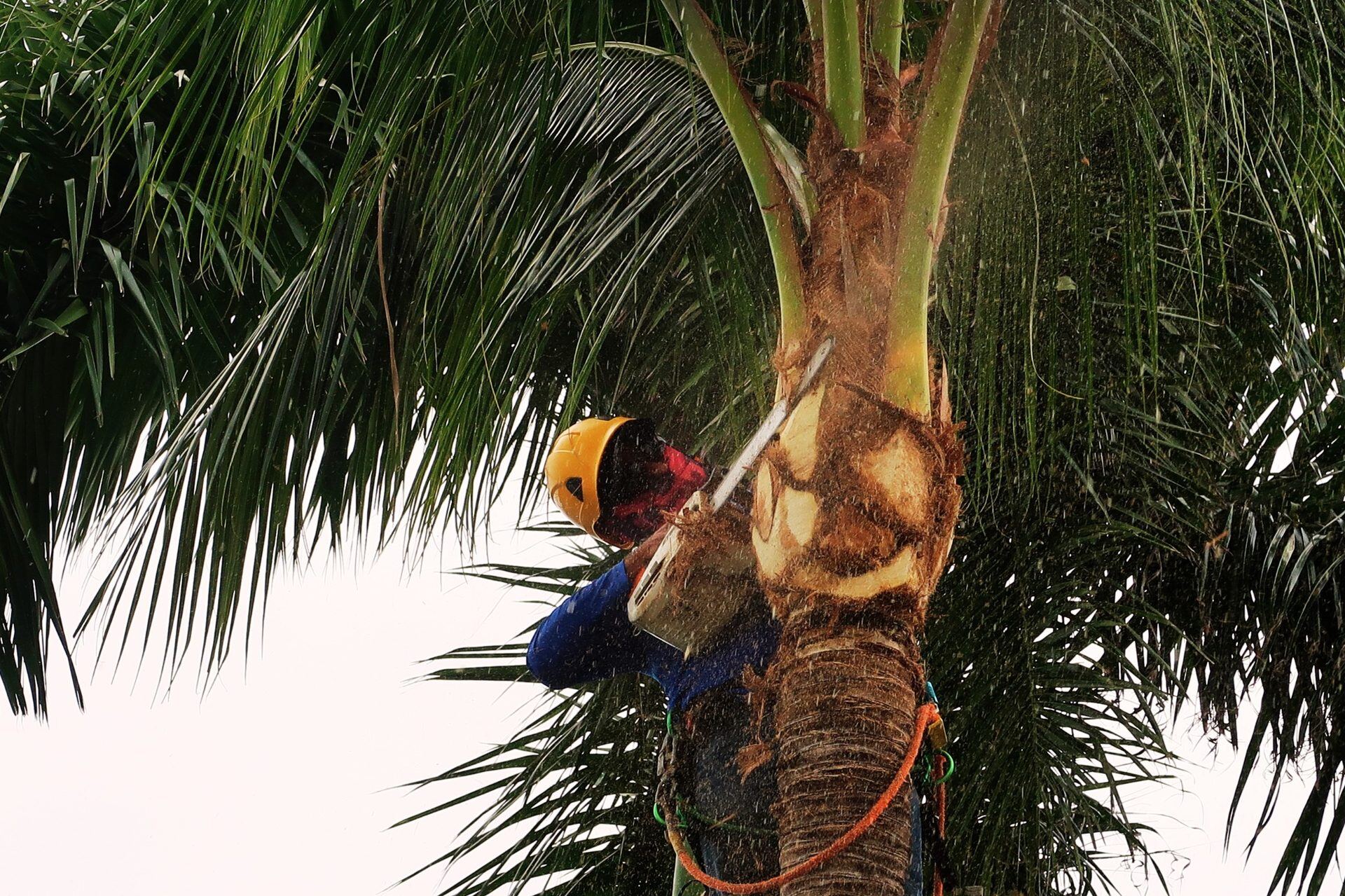
- Palm pruning — removing dead fronds and seed pods without over-pruning, which weakens the palm and makes it more storm-susceptible.
Why Southwest Florida Trees Need Pruning Now
Southwest Florida's tree canopy is a mix of species that each respond differently to hurricanes. Live oaks are among the most wind-resistant trees in the region, but only if their canopies have been properly thinned and their structure maintained. Laurel oaks, ficus, and Australian pines are far more failure-prone and need more aggressive attention before June. Palms—especially queen palms and royal palms—need dead fronds removed but should never be over-pruned, which is a common mistake that weakens the tree heading into storm season.
In coastal communities like Sanibel, Captiva, and Fort Myers Beach, salt spray and sandy soil add another layer of stress. Trees already weakened by salt exposure and shallow root systems are the first to fail in a hurricane. Inland areas like Fort Myers, Naples, Bonita Springs, and Estero face their own challenges—dense subdivisions with mature trees close to homes, where a single failure can cause catastrophic damage. Proper pruning done before the season reduces that risk dramatically.
The best window for hurricane prep pruning is early spring—March through May—so the tree has time to recover and seal pruning wounds before the first storms form. But if you're reading this during an active season, it is still worth scheduling an assessment. Late pruning is better than no pruning, as long as it is done correctly.
The Difference Between an Arborist and a Guy With a Chainsaw
After every major hurricane in Southwest Florida, the same story plays out: unlicensed crews fan out across Sanibel, Fort Myers, and Naples offering cheap tree work to desperate homeowners. The results are predictable—trees butchered, property damaged, insurance claims denied because the work was performed by an unlicensed contractor, and homeowners left with trees that are now more dangerous than they were before the storm.
An ISA Certified Arborist has been trained in tree biology, structural assessment, and proper pruning techniques. They know which branches to remove, which to leave, and how to make cuts that the tree can seal naturally. They carry proper licensing and insurance. And they will tell you the truth about a tree—whether it can be made safe with pruning or whether removal is the responsible call.
- ISA Certified Arborist credentials — verified training in tree care, health, and safety.
- Proper licensing and insurance — protection for you and your property if something goes wrong.
- ANSI A300 pruning standards — the industry standard for how, where, and how much to cut.
- An honest assessment — not upselling removals or performing unnecessary work.
What Happens to Unpruned Trees in a Hurricane
The data from hurricanes across Southwest Florida is consistent. Trees that had been properly pruned within the prior two years survived at significantly higher rates than trees that had not been maintained. Unpruned trees fail in predictable ways: large limbs snap at weak unions, dense canopies act as sails and topple the entire tree, and dead branches become airborne projectiles that damage roofs, vehicles, and neighboring property.
The cost of proper pruning before hurricane season is a fraction of the cost of storm damage cleanup, tree removal, and property repair after the fact. More importantly, it protects the people under those trees when the wind starts howling.
Schedule Your Hurricane-Season Pruning Assessment
Tree West has been pruning and preparing trees for hurricane season across Sanibel, Captiva, Fort Myers, Naples, Bonita Springs, Estero, and all of Southwest Florida for over three decades. Our ISA Certified Arborists will evaluate every tree on your property, identify the specific risks, and give you a clear, honest plan—no pressure, no unnecessary work, no cutting corners. Call us at (239) 910-3256 or request a free estimate online. Hurricane season is here—let's make sure your trees are ready.
Ready to get your trees pruned before hurricane season? Our ISA Certified Arborists provide professional trimming and storm prep pruning across Southwest Florida.
Explore Tree Trimming ServicesRelated Reading
All ArticlesTree TrimmingTree Trimming Services in Pelican Bay, Naples FL: What Homeowners Need to Know
Professional tree trimming in Pelican Bay requires ISA-certified arborists who understand the community's mature canopy, HOA guidelines, and coastal wind exposure.
Read Article Landscape & Tree Care
Tree Care & Landscape Services in Pelican Marsh, Naples FL: A Homeowner's Guide
From mature oak pruning to palm maintenance and landscape design, discover professional tree and landscape services for Pelican Marsh homeowners in Naples, FL.
Read Article Landscape & Tree Care
Tree & Landscape Services in Bonita Bay, Bonita Springs FL: A Homeowner's Guide
Bonita Bay's mature trees and waterfront location demand specialized care. Learn how ISA Certified Arborists handle tree trimming, palm maintenance, and landscape design here.
Read Article